Questions to ask ourselves to avoid pitfalls.
In the shadow of ongoing genocide and unimaginable violence against Palestinians, organizations, activist groups, and individuals are often required to argue, often before an audience determined to turn a deaf ear, that another way is possible. In this Sisyphean and crucial work, it’s easy to make mistakes, and the questions below are intended to offer reflection on how we express ourselves and what we propose. As the boundaries of acceptable discourse in Israel become increasingly narrow, it’s sometimes tempting to present arguments that align with the assumptions many Israelis have about "security," "morality," "violence," and more. Sometimes we feel there's no other way to speak to the mainstream.
However, obscuring reality and the power dynamics within it is both unjust and leads to distrust: distrust from Palestinians, distrust within our struggle, and even distrust from the listeners, who will recognize inconsistencies. From the murderous low to which years of lack of political vision and the normalization of state violence have led us, there is no easy way to rise. The path lies in solidarity with the Palestinian struggle, building trust, and through that, constructing political power, political vision, and a different political culture – even if it takes a long time.
This is not a set of instructions but an invitation to ask ourselves questions and beware of obstacles. This invitation is based on mistakes we have made ourselves and have tried, and are trying, to learn from. It is an invitation to dialogue, inquiry, and refining our ability to act in solidarity. We hope you find this tool useful for your activism.
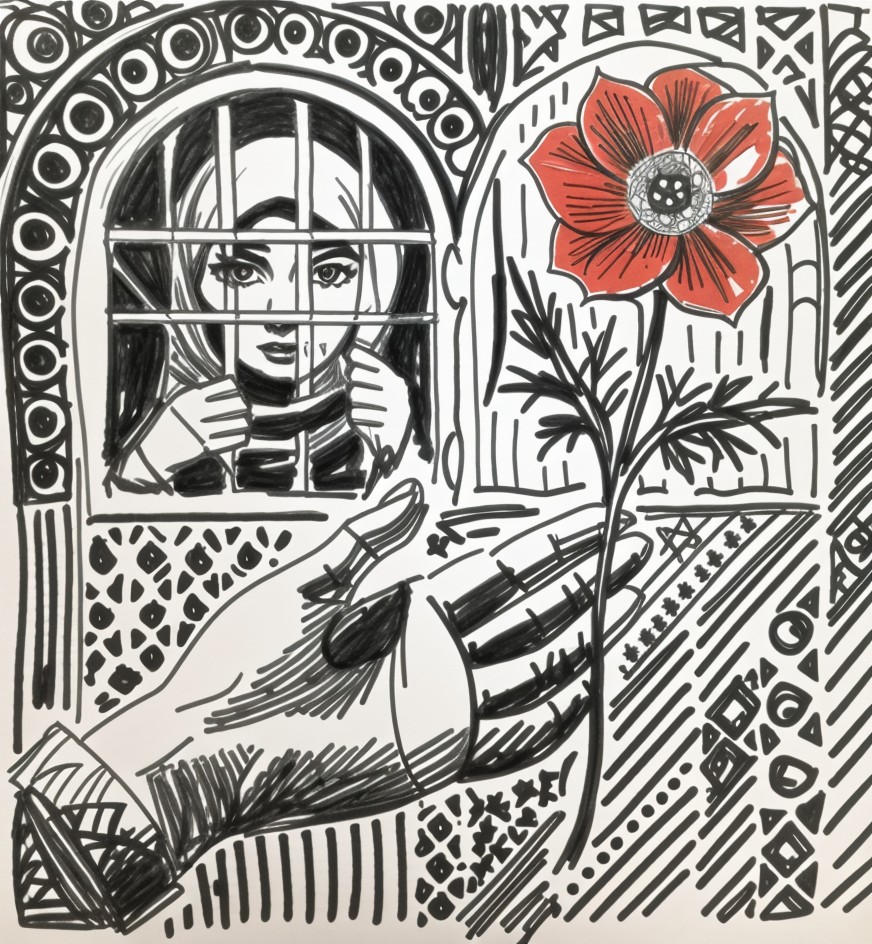
1. Does your argument ignore the systematic violence of the State of Israel against Palestinians since its establishment? Does it try to convince your audience that the state needs to be "fixed" so that it can "return to being good"?
"Settler violence", "The right wing stole our country from us", "Save Israel from the far-right", "Save democracy"
And many other similar expressions imply a commitment to saving and improving the regime, viewing the rise of right-wing forces as a mistake or deviation that needs to be corrected. Instead of acknowledging the oppressive nature of the regime from its inception and striving to establish an equal, just, and free society that supports the lives of everyone living in this region, we risk normalizing the oppressive past, whether recent or distant, as if it were a desirable or equitable state. By using these arguments we also normalize the existing law as if it can ever be a tool for protecting Palestinians or ensure equality when, in reality, the “judicial and law enforcement system has the same goal as violent settler gangs: To ethnically cleanse as much land as possible. So they are much more similar than they are in conflict with each other.
2. Does your argument perpetuate a sense of superiority?
"The Ben-Gvirs are making us similar to Arab states", "If we behave like this, how are we any different from them?", "We must uphold the purity of arms of the most moral army."
These are examples of arguments that, without basis, assume that the Israeli regime is better than the regimes around it and deny the violence in its establishment and actions since then. Such arguments normalize the racist notion that Jews are better than other peoples, especially Palestinians. These statements, it is important to note, are closely tied to a perception of white/European superiority.
3. Does your argument distinguish between “good” and “bad” Palestinians? Does it delegitimize certain forms of resistance?
"Support non-violent resistance", "Most Palestinians are not extremists", "We need to strengthen moderate forces within Palestinian society", "Only the terrorists should be punished"
These arguments ignore the fact that Palestinians have been violently and lethally oppressed by military means for over 75 years, and they have the right to choose their tools of struggle against the ethnic cleansing and genocide imposed on them. Active support for any form of resistance should not come at the expense of legitimizing other forms of resistance, nor should it overlook the fact that all resistance must be seen in the context of the existence of an oppressive regime. That same oppressive regime also assumes the power to define what "terrorism" or “violence” are – let’s not accept that definition.
4. Does your argument promote a misleading narrative of partnership and symmetry between Israelis and Palestinians?
"Let’s unite against extremists on both sides", "Arabs and Jews refuse to be enemies", "Coexistence", "Conflict resolution"
Expressions such as these, without a demand for dismantling the privileges of the Israeli-Jewish population, erase the power dynamics that we aim to eliminate. These phrases suggest that there is a way to live in partnership without equality, or that this is a conflict between collectives of equal status. Such arguments normalize the unequal power relations between Palestinians and Israeli Jews. The very appeal to the "Jewish majority" always accepts the premises of Zionism, which has, since its inception, engineered a "Jewish majority" by ethnically cleansing Palestinians, stripping Palestinians of citizenship, deliberately ignoring non-Jewish citizens and their voices, and silencing Palestinian citizens of Israel – those who survived the ethnic cleansing of the Nakba.
5. Are the proposed solutions based on a principle of separation? Or of connection?
"They are there, and we are here", "Two states for two peoples"
These phrases hide the fact that all of Palestine was and still is the homeland and home of Palestinians, and that its division into areas where Palestinians have different citizenship statuses is fundamentally a mechanism of the Israeli regime for dispossession and control of Palestinians. When we focus on solutions of separation and fences as the only possibility, we also assume that true partnership and shared living, in freedom and equality, are not possible. We continue to promote exclusion and entrenchment as conditions for security, even if we use the rhetoric of partnership. Instead, we could embrace the notion that safety and secure living will come from making life in this land safe for everyone: Returning Palestinian refugees, Palestinians already living here and also Jewish-Israelis and anyone who lives here.
This activist tool draws from a similar text created by the Community Justice Exchange project and is distributed with the permission of the original creators. We thank them.
